SaaS Keyword Research
A Complete Guide For 2024
Newbies may find it frightening to dive into the ocean of SaaS SEO, but don't worry! If you are looking for a complete guide to understanding the SaaS keyword research process, you have come to the perfect place.
This comprehensive blog, compiled from insights from leading industry experts, is your one-stop shop for everything related to SaaS keyword research.
Whether you're just getting started or seeking to improve your methods, we've covered you with in-depth analysis, the exact process, secret tips, and tricks for generating more targeted traffic to your website. Let's dive into the depths of this SaaS keyword research guide.
WHAT IS SAAS KEYWORD RESEARCH?
Understanding the core of SaaS keyword research to dominate search engines.
SaaS keyword research is a critical element in the strategy of any Software as a Service (SaaS) company aiming to enhance its online visibility and attract targeted traffic to its website. This long process involves identifying and analyzing the specific terms, words and phrases that potential customers use in search engines, such as Google, when looking for products or solutions that the company offers or the problems that these products or solutions can solve.
The scope of SaaS keyword research extends beyond just commercial or branded keywords. For instance, a company like Mailchimp, known for its email automation tools, cannot solely focus on creating content around keywords such as "Mailchimp vs. SendX" or "Mailchimp features."
It is essential for such a company to also target broader keywords that capture the needs of potential customers, like "best email automation tools" or "what is email automation." These broader keywords are crucial in driving targeted traffic to the company's website, where visitors can be further engaged through well-placed calls to action (CTAs), leading them towards free trial sign-ups or product demonstrations.
Once the relevant keywords are identified through thorough research, they can be strategically employed in the company's on-page and off-page SEO (Search Engine Optimization) campaigns. This improves the website's ranking on search engine results pages (SERPs) and raises its chance of obtaining a more relevant audience interested in the product or service that is being provided.
What you'll get:
The SaaS SEO Keyword Research Process
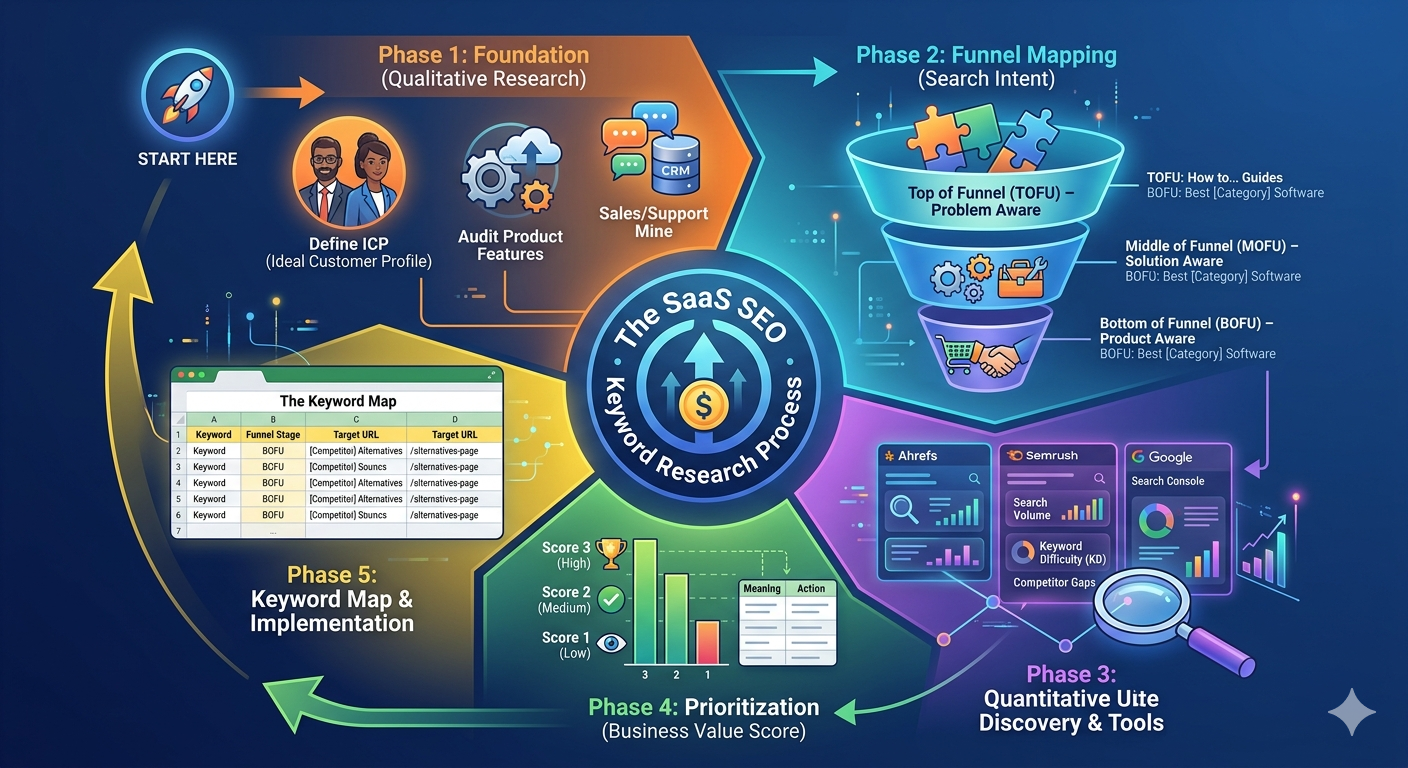
In the competitive landscape of Software as a Service (SaaS), executing a precise and effective SEO keyword research process is pivotal for crafting impactful marketing campaigns. Random selection or mere guesswork in choosing keywords will not suffice. At Rank and Trend, we employ a meticulously structured step-by-step process for our campaigns and SaaS clientele, ensuring a targeted approach that delivers results.
BRAINSTORM A SEED LIST
OF TOPICS AND TERMS
The initial phase involves gathering a foundational list of topics and terms, serving as the cornerstone of your keyword strategy. This stage calls for a collaborative effort across various teams.
Key Brainstorming Methods:
Explore the common questions, words, and phrases customers use during interactions with your brand, product, or team, such as during onboarding or website visits. For instance, if your customer success team notices frequent queries about how your project management tool differentiates from competitors, this insight could lead to targeting comparison-related topics and terms.
Input basic keywords related to your niche, like "project management," on Google and analyze the related terms and ideas that appear. This step is more about gathering a broad list rather than focusing on specifics like keyword difficulty or search volume.
With your list of seed terms, search on Google to identify your SERP competitors for these terms. This includes direct competitors (companies offering similar products) and indirect competitors (entities catering to a similar audience but not offering the same products). For example, while companies like Proofhub may be direct competitors, a publication like Forbes, ranking for "best project management tools," would be considered an indirect competitor. Prioritize analyzing direct competitors first, noting the keywords they target and rank for, and then look for opportunities they may have overlooked.
Having curated a list of potential keywords, the next step involves employing an SEO tool of your choice, such as Ahrefs, to delve into data and metrics associated with your keywords. This analysis aids in filtering out keywords that might be too challenging to rank for or may not provide the desired level of engagement or traffic.
Selecting keyword intent is critical in refining your keyword strategy, particularly for SaaS companies aiming to enhance their marketing efforts. Understanding the intent behind the searches that lead potential customers to your site allows you to make content that directly addresses their requirements and concerns, effectively guiding them through the buyer's journey.